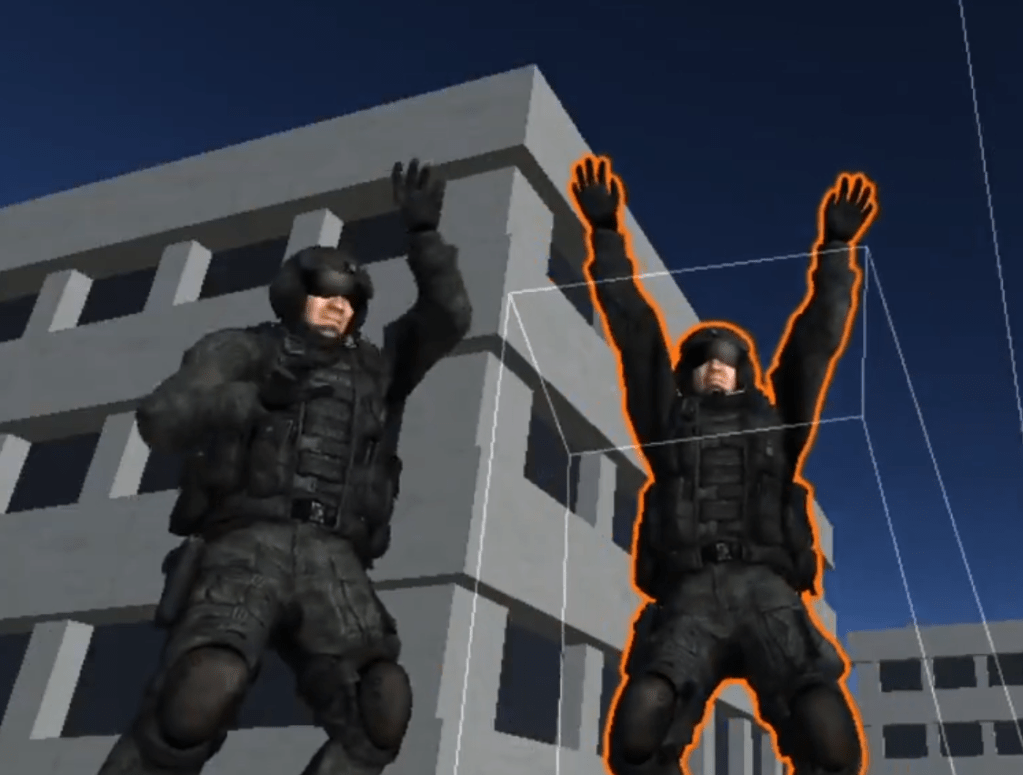
I’ve used several networking services, including Normcore and Photon, coupled with the popular FinalIK asset for Unity. In the above example, full body avatars were networked via Normcore with player controls and interactions provided by VR Toolkit 3.0. The project was up and running from scratch within a single hour, providing players a way to meet and chat, using avatars with animated arms and legs, in a city environment with buildings and VR climbing mechanics.
After receiving several messages inquiring how this was created so quickly and easily, I responded with an impromptu video demonstrating the way I implemented the FinalIK asset. A common mistake is that developers will assume every body part needs to be networked, when it is actually far easier and more efficient to only sync each VR player’s tracked hardware (in most cases this is only the head and hands), and to let each client solve the IK for all players locally.
 Jason Gluck